











Tinubu Welcomes 21 New Envoys, Signals Nigeria’s Renewed Global Engagement Strategy
An analysis of the diplomatic priorities and geopolitical signals from the accreditation of 21 new foreign representatives in Abuja.
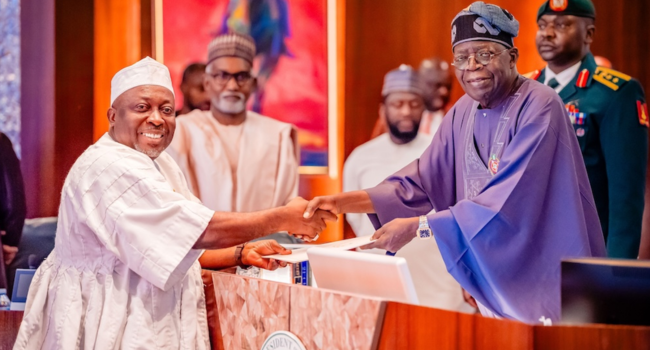
ABUJA – President Bola Tinubu’s reception of Letters of Credence from 21 new foreign envoys on Thursday was more than a ceremonial formality. The event, held at the State House Council Chamber, served as a strategic platform to articulate Nigeria’s foreign policy direction under his administration and to identify key partnership corridors for the coming years.
The group of diplomats—comprising 17 ambassadors and four high commissioners—represents a diverse cross-section of global interests, from traditional European partners to crucial African neighbors and emerging Asian powers.
A Strategic Mix of Partners
The list of newly accredited envoys reveals a multi-vector foreign policy approach. The presence of representatives from Chad, Gabon, Mauritania, Ghana, and Liberia underscores a continued focus on West African and Sahelian stability, a region where Nigeria seeks to maintain its leadership role within ECOWAS.
Simultaneously, the accreditation of envoys from major economies like Japan, Spain, Italy, Austria, Poland, and India points to a deliberate push for enhanced trade, investment, and technological exchange. The inclusion of nations like Iran, Türkiye, Thailand, and Indonesia suggests Nigeria is actively cultivating relationships beyond its traditional Western alliances, potentially seeking more balanced geopolitical footing and exploring alternative models of development cooperation.
Beyond Ceremony: A Blueprint for Cooperation
In his remarks, President Tinubu moved swiftly from welcome to agenda-setting. He explicitly outlined sectors ripe for deepened collaboration: trade, energy, agriculture, education, technology, and defence. This list is a telling indicator of Nigeria’s domestic priorities—energy security, food security, economic diversification, and military modernization—which it now seeks to advance through international partnership.
“The global community faces evolving challenges: security threats, climate pressures, economic instability, and humanitarian issues,” Tinubu stated, framing Nigeria not just as a nation with needs, but as a potential partner in solving transnational problems. This language positions Nigeria as a responsible stakeholder, a narrative crucial for attracting serious investment and strategic trust.
The Diplomatic Response: Recognizing Nigeria’s Weight
The response from the diplomatic corps, voiced by Japan’s Ambassador Suzuki Hideo, affirmed Nigeria’s perceived influence. Hideo’s description of the event as “historic” and his acknowledgment of Nigeria’s role in ECOWAS and Africa reflects the country’s enduring strategic importance as the continent’s largest economy and most populous nation.
This external recognition is vital for Tinubu’s administration, which is navigating complex domestic economic reforms. Strong, visible international engagement serves to bolster domestic confidence and signal to global markets that Nigeria remains open for business.
Analysis: The “So What” of the Credentials Ceremony
While the receipt of credentials is a routine diplomatic process, the scale and composition of this cohort, combined with the President’s pointed messaging, offer clear insights:
- Rebooting Relationships: Following elections and a period of focused domestic policy, this event marks a concerted effort to reinvigorate bilateral ties across multiple continents.
- Economics First: The emphasis on trade, energy, and technology reveals an foreign policy increasingly harnessed to domestic economic revival plans.
- Security as a Pillar: The mention of defence cooperation, alongside envoys from frontier nations, highlights that regional security remains an inextricable part of Nigeria’s international dialogue.
- A Balancing Act: The diverse roster of countries indicates a pragmatic, non-aligned strategy, seeking beneficial relationships with a wide array of global actors.
The true test will be in the follow-through. The “open door” President Tinubu promised to the diplomats must now translate into sustained governmental engagement to convert these diplomatic openings into tangible agreements on investment, security cooperation, and technological transfer.
Primary Source & Attribution: This report is based on information contained in an official statement from the State House, Abuja, as reported by Channels Television.