










Renewables Outpace Fossil Fuels Despite US Policy Shift, IEA Report Finds
The global transition to renewable energy is accelerating faster than the expansion of fossil fuels, even as policy shifts in the United States create headwinds, according to a major new report from the International Energy Agency (IEA). The analysis suggests global oil demand could peak around 2030.
The Paris-based agency, which advises developed nations, laid out several energy futures in its annual World Energy Outlook. This year’s report arrives amid heightened political tension, as the IEA has faced criticism from the Trump administration over its projections for declining fossil fuel demand.
A Resilient Global Trend
Despite the changing political landscape in one of the world’s largest economies, the data points to an unstoppable trend. “The pace varies, but renewables grow faster than any other major energy source in all scenarios, led by solar photovoltaics,” the agency stated in its comprehensive 518-page assessment.
In one striking projection, the report notes that policy changes could result in the US having 30 percent less renewable capacity installed by 2035 than forecast in last year’s outlook. Yet, at the global level, renewables are expected to continue their rapid expansion unabated.
Navigating Political Pressures
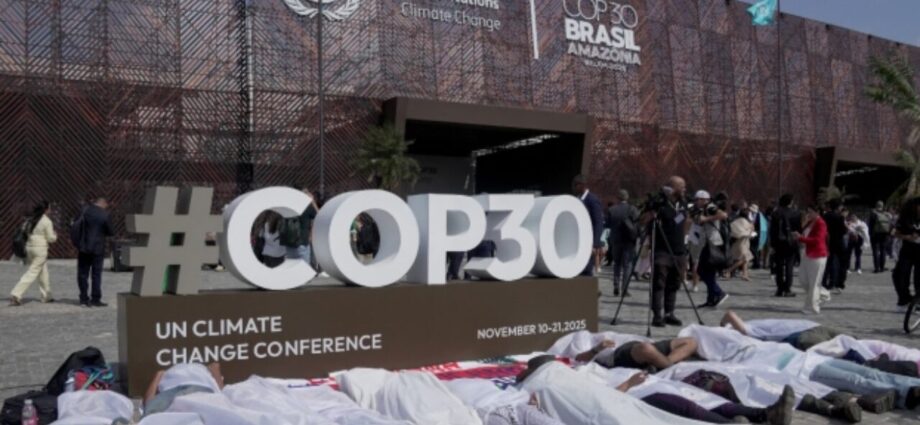
The IEA found itself walking a fine line in drafting this year’s outlook. The report’s release coincides with the UN’s COP30 climate conference in Belem, Brazil—an event shunned by the Trump administration.
US Energy Secretary Chris Wright had threatened in July to withdraw from the IEA if it did not reform its operations, signaling the high-stakes nature of the agency’s forecasts. The Trump administration has championed an expansion of oil and gas production while rolling back the clean energy policies of the previous administration.
Three Scenarios for the Future
The IEA employed three distinct scenarios to map the energy landscape:
Current Policies Scenario (CPS): This model, which the IEA had dropped from its reports in 2020 but reintroduced this year, assumes only policies already in place are implemented. Under this scenario, oil and natural gas demand would increase by 16 percent by 2035.
Stated Policies Scenario (STEPS): This more likely pathway incorporates government policies that have been announced but not yet fully implemented. Here, the IEA projects oil demand will peak “around 2030” and decline to 100 million barrels per day by 2035.
Net Zero by 2050 Scenario: This ambitious model outlines a path to achieving net zero emissions by mid-century.
Rachel Cleetus, senior policy director at the Union of Concerned Scientists, described the reintroduced CPS scenario as “entirely politically motivated,” adding that “the Trump administration, unfortunately, has been setting bad policy in the United States and trying to undermine policy around the world.”
The Electricity Demand Surge
The report highlights a significant surge in electricity demand driven by multiple factors. Advanced economies and China are experiencing growing power needs from data centers and artificial intelligence applications, while developing countries are seeing increased electricity use for air conditioning.
China emerges as a renewable energy powerhouse in all scenarios, accounting for 45 to 60 percent of global renewable deployment over the next decade.
Climate Goals Remain Elusive
Despite the promising growth of renewables, the IEA delivered sobering news on climate targets. Under every scenario modeled, the world would exceed 1.5°C of warming above pre-industrial levels—the most ambitious goal of the 2015 Paris climate agreement.
“There is less momentum than before behind national and international efforts to reduce emissions, yet climate risks are rising,” the report cautioned.
The temperature projections vary dramatically by scenario. Under the Current Policies Scenario, warming would exceed 2°C around 2050 and reach 2.9°C by 2100. The Stated Policies Scenario shows warming exceeding 2°C by around 2060 and reaching 2.5°C by century’s end. Only the net-zero scenario offers hope, with warming peaking at about 1.65°C around 2050 before declining slowly.
An Inevitable Transition
David Tong, global industry campaign manager at the non-profit advocacy group Oil Change International, noted the report’s dual message. The IEA has “confirmed that no single country can stop the energy transition, with oil and coal demand to peak by 2030 in its business-as-usual scenario,” he said.
“But this year’s report also shows Donald Trump’s dystopian future, bringing back the old, fossil-fuel intense, high pollution Current Policies Scenario.”
The IEA’s findings suggest that while national policies can slow the clean energy transition, the global momentum toward renewables has become a force of its own—one that even the world’s most powerful nations may struggle to reverse.
All credit goes to the original article, for more information read the: Source link