









The Report
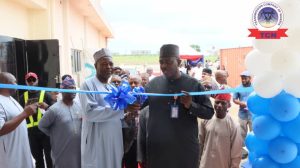
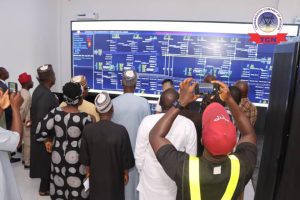
As reported by an uncredited source, the Transmission Company of Nigeria (TCN) has formally handed over a temporary National Control Centre to the Nigerian Independent System Operator (NISO). The facility, located at Abuja’s Gwagwalada 330kV Transmission Substation, is equipped with a new Supervisory Control and Data Acquisition/Energy Management System (SCADA/EMS) digital platform. This technology enables operators to monitor and respond to live grid activity instantaneously. Until the permanent National Control Centre is completed, the facility will serve as NISO’s operational headquarters for managing electricity transmission across the country.
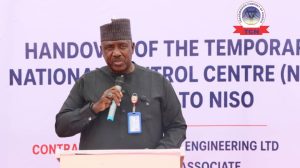
Speaking during the handover ceremony on Tuesday, TCN’s Managing Director/CEO, Engr. Sule Ahmed Abdulaziz, described the development as a major milestone in Nigeria’s power sector reforms and an important step toward building a more reliable electricity transmission network. Represented by the General Manager, Project Coordination, Engr. Amini Tahir, Abdulaziz said the project goes beyond the completion of a new building, noting that it marks the beginning of a new era in grid management and national power coordination. He explained that while the facility was initially meant to temporarily house operational staff and the newly deployed SCADA/EMS and telecommunications systems, its role has expanded. It will now serve as NISO’s temporary National Control Centre, allowing the agency to manage real-time grid operations until the permanent control centre is completed. According to him, placing the facility under NISO’s control is expected to improve grid management, strengthen system reliability and ultimately support better electricity service delivery to Nigerians. Abdulaziz also acknowledged the World Bank for supporting the project and reaffirmed TCN’s commitment to working closely with stakeholders to modernise the country’s electricity transmission infrastructure.
Receiving the facility on behalf of NISO, the agency’s Managing Director/CEO, Engr. Abdu Mohammed Bello, represented by the General Manager, System Planning, Engr. Kabir Adamu, described the handover as a significant operational milestone rather than a routine transfer of infrastructure. He said the SCADA/EMS platform is central to modern electricity grid management because it gives system operators the ability to monitor and coordinate power transmission in real time, helping to improve efficiency, reliability and faster response to grid disturbances. Bello assured that NISO would effectively manage the facility while continuing to collaborate with TCN and other stakeholders to strengthen Nigeria’s power system. TCN’s Project Manager, Engr. Samuel Fakinlade, disclosed that once the permanent National Control Centre in Gwagwalada is completed, all equipment and operational personnel currently stationed at the temporary facility will be relocated, after which the building will revert to TCN.
Nigeria Time News Analysis
From a Nigerian policy perspective, this handover is more than a logistical transfer—it represents a critical step in the operational unbundling of the power sector. The creation of NISO as an independent system operator was a key recommendation of the Electric Power Sector Reform Act (EPSRA) of 2005, but its full implementation has been slow. By temporarily housing NISO’s control centre at Gwagwalada, TCN is effectively ceding real-time grid management to an entity designed to operate at arm’s length from transmission infrastructure ownership. This separation is intended to reduce conflicts of interest, improve transparency in grid access, and ultimately attract private investment into the sector.
Looking at the broader ECOWAS implications, Nigeria’s grid stability is a regional concern. The West African Power Pool (WAPP) relies on Nigeria’s transmission backbone to facilitate cross-border electricity trade with Benin, Togo, Niger, and Ghana. Frequent grid collapses in Nigeria have historically disrupted these interconnections, undermining the reliability of regional power supply. The deployment of SCADA/EMS—a technology already in use in more advanced grids globally—could significantly reduce the frequency and duration of system disturbances. If successful, this modernisation could enhance Nigeria’s credibility as a reliable partner in WAPP’s long-term goal of creating a unified West African electricity market.
For the Nigerian diaspora, particularly those investing in off-grid solar or backup power solutions for family and businesses back home, improved grid stability could reduce the cost burden of alternative energy. Many diaspora remittances are spent on diesel generators and inverter batteries to compensate for erratic grid supply. A more stable national grid would free up household and small-business capital for other productive uses, potentially increasing the economic multiplier effect of diaspora funds.
However, the temporary nature of this facility raises questions about the timeline for the permanent National Control Centre. The handover statement did not provide a completion date for the permanent centre, and past infrastructure projects in Nigeria’s power sector have faced significant delays due to funding gaps, procurement bottlenecks, and contractor performance issues. Without a clear schedule, the temporary arrangement risks becoming semi-permanent, which could undermine the very operational independence NISO is meant to embody.
Regional Context
Historically, Nigeria’s grid has suffered from chronic instability, with over 200 partial or total collapses recorded between 2010 and 2023. These collapses are often attributed to a combination of aging infrastructure, gas supply shortages, and inadequate real-time monitoring. The SCADA/EMS system deployed at Gwagwalada is designed to address the monitoring gap, but it is not a panacea. Without corresponding investments in generation capacity, gas supply reliability, and distribution network upgrades, the grid will remain vulnerable to cascading failures. The World Bank’s support for this project is part of a broader $1.25 billion Power Sector Recovery Operation (PSRO) aimed at improving financial viability and operational performance across the value chain. The handover of the temporary control centre is a tangible output of that programme, but sustained progress will depend on continued political will and institutional discipline.
Original Reporting By: Uncredited Source