











Lawan’s 75% Vote Pledge for 2027: A Strategic Boast or a Sign of Shifting Northern Alliances?
An analysis of the political calculus behind a senior APC figure’s bold electoral projection for President Tinubu.

Source: Twitter
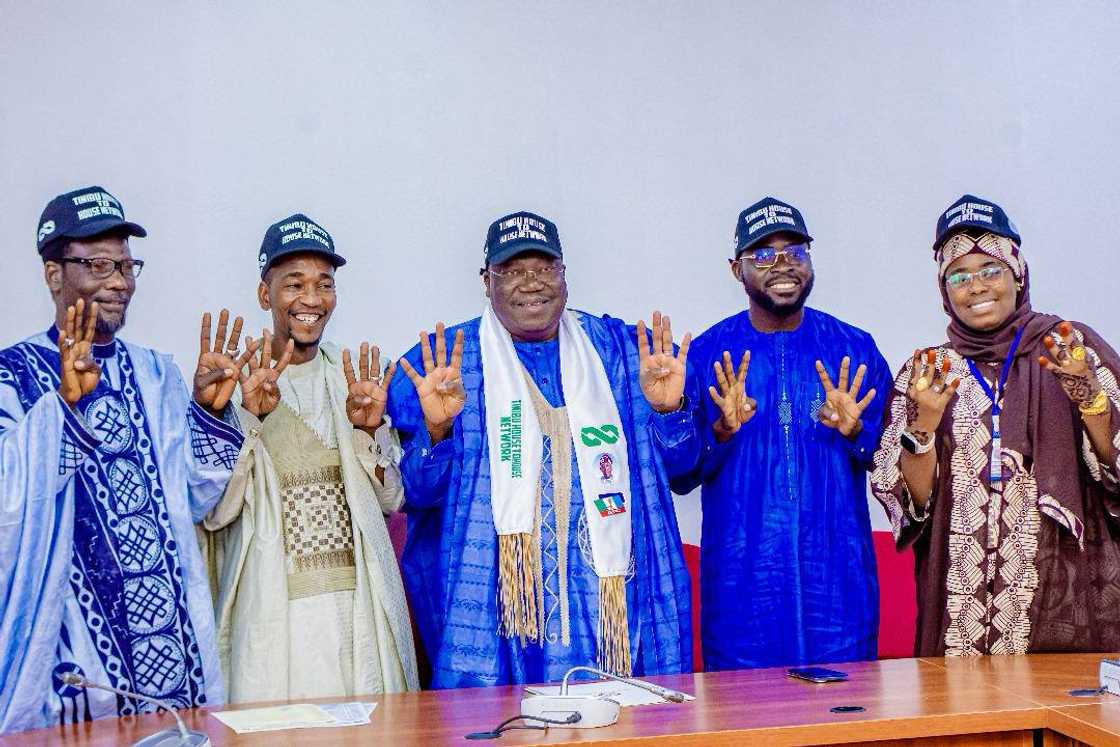
In a move signaling the unofficial start of the 2027 campaign cycle, former Senate President Ahmad Lawan has made a striking prediction: Nigeria’s northern region will deliver over 75% of its votes to re-elect President Bola Ahmed Tinubu. The declaration, made during his appointment as National Patron of the pro-Tinubu “House-to-House Network,” is more than mere political cheerleading; it is a strategic statement aimed at consolidating the ruling All Progressives Congress (APC) base and projecting an image of invincibility three years before the polls.
The Anatomy of a Political Projection
Lawan’s specific figure—75%—is politically significant. He benchmarked it against the approximately 63% northern support he claims Tinubu secured in 2023. This numerical boast serves a dual purpose: it is both a reward for perceived performance and a directive to the region’s political machinery. By framing the next election as a quest for an even greater mandate, Lawan attempts to shift the narrative from a potential referendum on Tinubu’s first-term hardships to a validation of his leadership trajectory.
His arguments for this projected landslide hinge on two pillars: economic stability and national security. As Chairman of the Senate Committee on Defence, Lawan cited investments in the armed forces and ongoing operations. On the economy, he asserted it is “stable and facing the right direction,” a point likely to be debated by millions of Nigerians grappling with inflation and a cost-of-living crisis. This defense of the administration’s record is the foundational logic for his call for continuity, warning against “trying somebody new who may not do even half.”
Beyond the Boast: The Northern Political Calculus
Lawan’s pronouncement cannot be divorced from the complex and fluid dynamics of Nigeria’s northern politics. The region is not a monolith, and its voting patterns have historically been influenced by a mix of ethnic, religious, and socio-economic factors. The 2023 election itself demonstrated a more fractured northern vote than Lawan’s 63% claim might suggest, with strong showings by opposition candidates like Atiku Abubakar and Peter Obi in several northern states.
Source: Facebook
Therefore, the 75% target is less a forecast and more a political objective. It is a public goal set for the “Tinubu House-to-House Network” and similar grassroots groups, emphasizing door-to-door mobilization in the North. It also serves as an early message to potential northern aspirants within and outside the APC, suggesting that the region’s elite should consolidate behind Tinubu rather than fragment the vote.
The 2027 Landscape: Continuity Versus Experimentation
The core of Lawan’s case is the argument for continuity—a classic incumbent advantage strategy. He posits that the known entity of Tinubu, despite current challenges, is a safer bet than an unknown alternative. This narrative seeks to capitalize on the inherent risk-aversion in electoral politics. However, its success depends entirely on the administration’s tangible deliverables in the intervening years, particularly in addressing insecurity, economic diversification, and agricultural productivity crucial to the North.
Furthermore, Lawan’s claim that defections to the APC are driven by genuine belief, not inducement, is a deliberate effort to portray the party as a natural, stable hegemon. This frames the opposition as unstable and flighty, a psychological tactic long before any ballots are printed.
Conclusion: The Long Game Begins
Ahmad Lawan’s 75% vote pledge is the opening salvo in a long campaign. It is a blend of loyalty, strategy, and expectation-setting. While its numerical ambition may be aspirational, its real-world impact lies in shaping perceptions, mobilizing the party base, and attempting to pre-empt the formation of a strong northern opposition front. The coming years will test whether the administration’s performance can turn this political boast into electoral reality, or if the diverse electorate of northern Nigeria will once again defy simplistic predictions.
Primary Source: This analysis is based on reporting from Legit.ng, which covered Senator Ahmad Lawan’s remarks and appointment on December 11, 2024.