











Beyond the Tinsel: How Persistent Inflation is Reshaping American Holiday Traditions and Spending
An analysis of consumer sentiment reveals a fundamental shift in household economics as affordability concerns extend from grocery aisles to gift-giving.
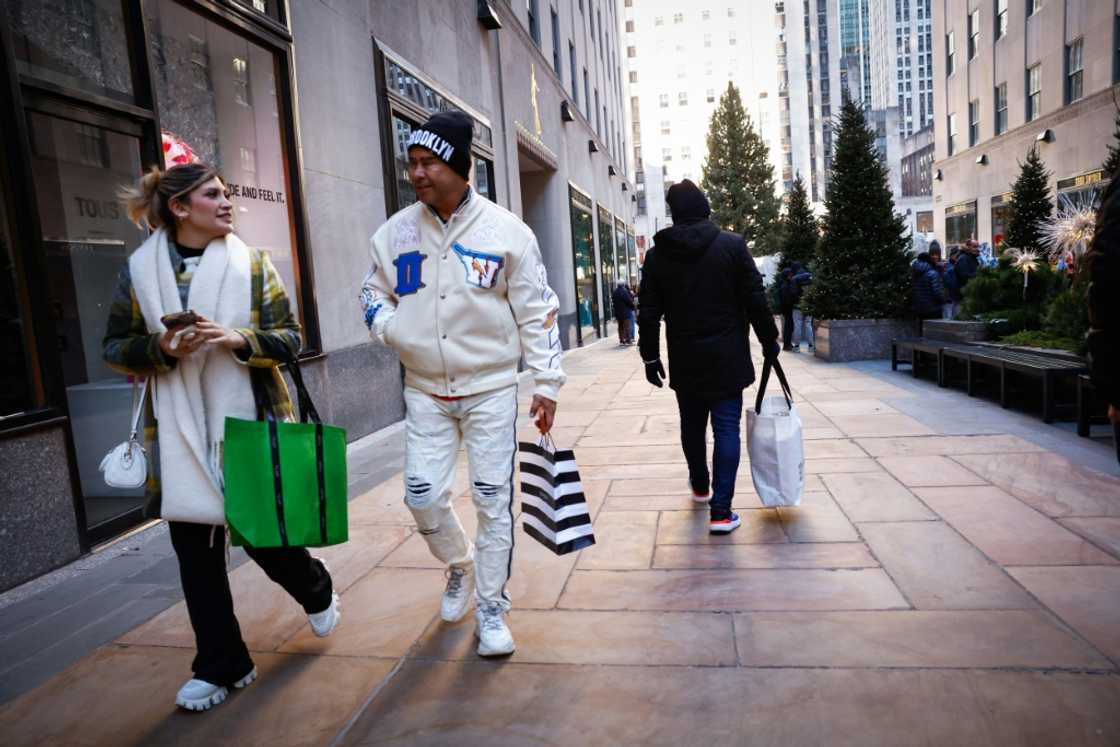
Photo: kena betancur / AFP
Source: AFP
WASHINGTON D.C. Metro Area — The festive lights and holiday markets are aglow, but beneath the seasonal sparkle, a more sobering economic reality is taking hold for American families. New reporting from a Christmas market in Gaithersburg, Maryland, highlights a pervasive theme: persistent inflation is forcing a strategic retreat in holiday spending, altering long-standing traditions and prioritizing necessity over generosity.
This shift is not merely anecdotal. It represents a critical phase in the post-pandemic economic recovery, where the initial resilience of consumer spending, buoyed by strong employment, is now being tested by the cumulative weight of higher prices for essentials. As one high school teacher at the market noted, the strategy has shifted to “just buy things for the kids,” sidelining adult gift exchanges—a microcosm of broader budgetary triage.
The Affordability Equation: From Political Flashpoint to Kitchen-Table Reality
The frustration voiced by shoppers transcends partisan rhetoric, becoming a tangible kitchen-table issue. While political figures have oscillated between labeling inflation a “hoax” and acknowledging it as a “problem,” the daily experience for households is one of calculated compromise. Special education teacher Karen Jenkins’s comment on “outrageous” grocery prices underscores a key pressure point: when the cost of feeding a family rises, discretionary holiday spending is the first casualty.
This environment marks a distinct evolution from the inflationary spike of 2022. As Joanne Hsu, director of the University of Michigan’s Surveys of Consumers, indicates, the current moment lacks the cushion of unshakable income confidence. Consumers are no longer “spending through it”; they are strategically pulling back, indicating a deeper, more entrenched concern about financial stability.

Photo: ANGELA WEISS / AFP
Source: AFP
Adaptive Strategies: The New Holiday Normal
The report reveals a portfolio of adaptive strategies becoming the new normal:
Gift-Giving Restructuring: The move to limit presents to children only represents a significant cultural shift, scaling back a core ritual of the holiday.
Essential-First Mentality: Individuals like pastry chef Olivia McPherson are making stark trade-offs, such as reducing meat purchases and forgoing independent apartments, to manage costs. The notion of receiving gifts is being mutually waived among friends, a social contract rewritten by economic pressure.
Income Maximization: For workers like Oscar, the 23-year-old machine operator, “making things work” necessitates multiple jobs—a reality that stretches time and energy thin during a season traditionally reserved for family and rest.
Broader Economic Implications: A Cautious Consumer Ahead
The behavioral changes documented in Maryland have macro-economic implications. A consumer base that is strategically cutting back on dining out, entertainment, and non-essential gifts suggests a more cautious economic actor heading into the new year. While the U.S. has avoided a recession, this pullback in discretionary spending could temper growth forecasts and make businesses more hesitant to expand or invest.
Furthermore, the psychological impact of a “three-year creep” of rising prices, as described by one shopper, may prove more durable than any single month’s inflation data. It fosters a mindset of scarcity and caution that can outlast the economic indicators, potentially leading to a longer-term moderation in consumption patterns.
Source & Attribution: This analysis is based on original reporting from Legit.ng, citing AFP, which provided the primary accounts and data from consumers in Gaithersburg, Maryland.