






Asiodu Book Launch Becomes Rallying Cry for Governance Reform in Nigeria
LAGOS, Nigeria – A book launch intended to honor a retired civil servant transformed into a significant political moment this week, as Nigeria’s former and current leaders used the occasion to issue a stark, collective critique of the nation’s governance standards and call for a return to foundational principles.
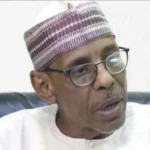
The event, centered on a biography of 91-year-old former Petroleum Minister and Permanent Secretary Philip Asiodu, saw figures like former Head of State Yakubu Gowon and current Delta State Governor Sheriff Oborevwori championing the values of integrity, selflessness, and long-term policy thinking—values they argued are embodied by Asiodu but are now in perilous decline.

More Than a Biography: A Mirror to the Present
The book, authored by Patricia Otuedon-Arawore and published by the Hallmarks of Labour Foundation, chronicles the career of Asiodu, a member of the famed “Super Permanent Secretaries” who helped steer Nigeria through its early post-independence and civil war eras. However, the commentary it provoked from dignitaries moved beyond historical reflection to present-day diagnosis.
“At a time when public service is often measured by materiality or influence, Honourable Asiodu stands as a reminder,” Governor Oborevwori stated pointedly. He challenged those in office to “rise above personal interests,” framing Asiodu’s legacy as a direct counterpoint to contemporary practices of patronage and short-term gain.
The “Walking Encyclopedia” and the Crisis of Institutional Memory
A recurring theme was Asiodu’s role as a living repository of Nigeria’s policy history. Described as a “walking encyclopedia,” his career spanned the creation of key economic and administrative structures. Esther Walson-Jack, Nigeria’s Head of Service, connected this directly to current efforts, noting his work “aligns with our ongoing efforts to reposition the civil service.”
This highlights a critical, often overlooked challenge in Nigerian governance: the erosion of institutional memory. The veneration of Asiodu underscores a anxiety that the deep, context-rich understanding of statecraft he represents is not being systematically passed on, leaving a vacuum filled by ad-hoc and often ineffective policy.
A Unifying Figure in a Divided Landscape
Significantly, Asiodu’s legacy served as a rare unifying platform. Yakubu Gowon, the former military ruler under whom Asiodu served, provided a personal and poignant foreword, recalling Asiodu’s courage during the turbulent coup period of 1966. “He remained deeply committed to Nigeria,” Gowon said, emphasizing a patriotism that transcended the profound ethnic and political fractures of the era.
This narrative of steadfast, nation-first service, championed by leaders from different generations and political spheres, projects an idealized model of the civil servant—one that is impartial, efficient, and risk-taking for the national good. Its celebration now suggests a broad, cross-cutting consensus that this model is urgently needed again.
The Subtext: A Response to Public Disillusionment
The forceful rhetoric on good governance did not occur in a vacuum. It comes amid widespread public dissatisfaction with government performance, corruption, and a lack of tangible development. The event, therefore, can be read as an elite response to this crisis of legitimacy.
By elevating Asiodu, these leaders are pointing to an alternative lineage and set of values within the Nigerian state itself. It is an attempt to reclaim a narrative of capable governance from the nation’s own history, implicitly arguing that the solution to current problems lies not in entirely new systems, but in recommitting to old, proven virtues that have been abandoned.
Conclusion: A Legacy as a Launchpad
Ultimately, the launch of Philip Asiodu: A Life in Service became more than a literary event. It morphed into a public seminar on Nigeria’s governance deficit and a strategic invocation of history to chart a way forward. The tributes to Asiodu’s “clarity of thought” and “policy foresight” are, in essence, critiques of the muddled and often reactionary nature of current policymaking.
As Asiodu himself expressed hope for Nigeria’s return to good governance, the powerful voices amplifying that wish signaled that his biography may serve as a foundational text for a nascent, elite-driven push for administrative renewal. Whether this rhetorical commitment translates into tangible reform remains the unanswered question hanging over the well-attended ceremony.
This analysis is based on the original report published by Premium Times.