











Trump Presents Controversial Data to Justify Firing of Labor Statistics Chief
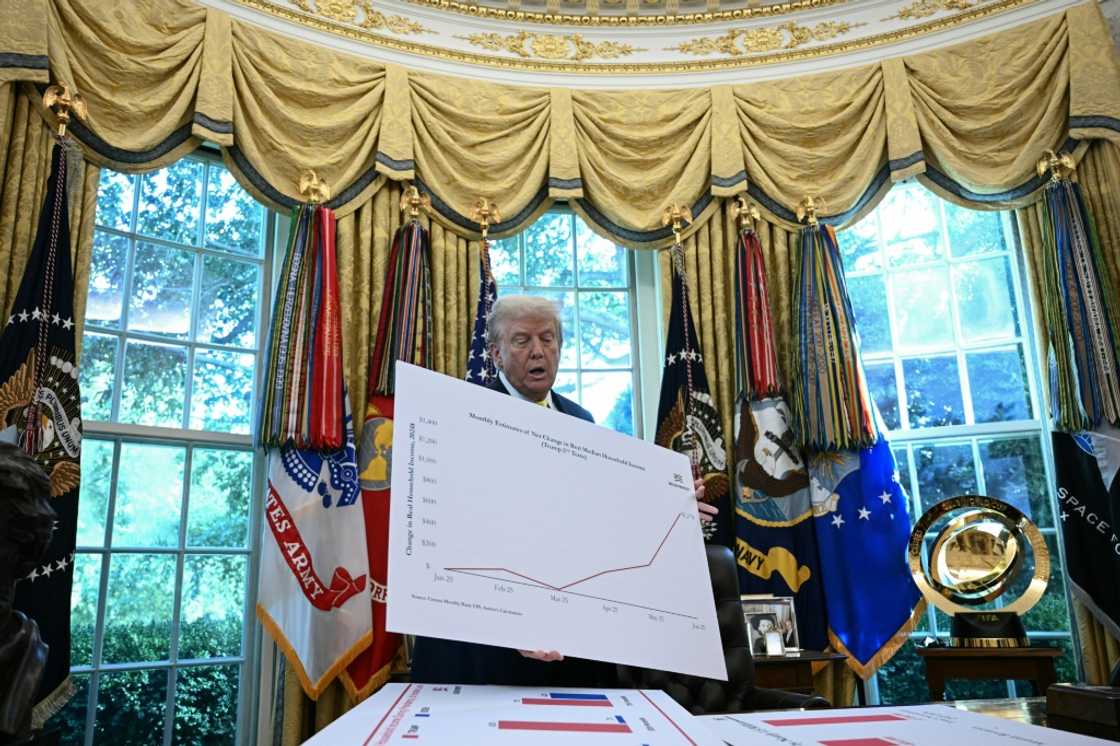
The Oval Office Showdown Over Jobs Data
In a dramatic Oval Office presentation that raised eyebrows across Washington, former President Donald Trump made explosive allegations Thursday about manipulated employment statistics. Flanked by conservative economist Stephen Moore, Trump displayed charts purporting to show the Bureau of Labor Statistics (BLS) had “purposely” inflated job creation numbers during the Biden administration.
“This wasn’t just some innocent mistake,” Trump asserted, his tone suggesting political motives behind the statistical revisions. “When you see numbers change this dramatically, you have to ask who benefits.”
The Numbers Behind the Controversy
According to the analysis presented:
- The BLS allegedly overestimated job creation by 1.5 million positions during Biden’s last two years
- Recent unpublished census data suggests household incomes rose $1,174 under Trump’s new term
- August revisions showed 258,000 fewer jobs created than initially reported
Moore, a Heritage Foundation economist and longtime Trump advisor, called the discrepancies “a gigantic error” that justified the president’s decision to fire BLS Commissioner Erika McEntarfer. The career statistician, confirmed to her position just seven months prior in January 2024, became collateral damage in what appears to be an escalating war over economic narratives.
A Pattern of Statistical Skepticism
This isn’t the first time employment data has become political football in Washington. The BLS routinely revises its monthly jobs reports as more complete data becomes available—a standard practice that sometimes produces significant swings in both directions. However, Trump’s administration has taken unprecedented steps to challenge these revisions.
“We had no confidence in those numbers. I mean the numbers were ridiculous,” Trump told reporters days before the Oval Office presentation. His comments echo similar skepticism he expressed about economic data during his first term, when he famously called official unemployment figures “phony.”
Experts Weigh In on Data Discrepancies
While the administration’s presentation made splashy headlines, independent economists caution that interpreting labor statistics requires nuance:
“Monthly jobs reports are estimates based on surveys, not complete counts,” explains Dr. Janet Yellen, former Federal Reserve Chair. “Revisions are normal as more employers respond to surveys and administrative data becomes available.”
The nonpartisan Congressional Budget Office notes that preliminary estimates have averaged revisions of about 0.1% up or down over the past decade—far smaller than the discrepancies Trump highlighted.
The Firing Fallout
McEntarfer’s abrupt dismissal marks the first time a BLS commissioner has been removed over statistical disagreements. Career staff at the agency have expressed concerns about political interference in what has traditionally been one of Washington’s most respected nonpartisan institutions.
“This sets a dangerous precedent,” warns former BLS Commissioner Erica Groshen. “When politicians start cherry-picking which economic data they like, it undermines public trust in all government statistics.”
Moore’s Controversial Role
The economist at Trump’s side during the presentation brings his own baggage. Trump previously attempted to appoint Moore to the Federal Reserve Board in 2019, but withdrew the nomination amid bipartisan criticism over Moore’s lack of formal economics training and past controversial statements about women in economics.
Moore’s current analysis relies heavily on unpublished Census data—a detail that has raised eyebrows among statisticians who emphasize the importance of peer review and methodological transparency.
What This Means for Economic Policy
The controversy comes at a delicate moment for the U.S. economy. With inflation cooling but still above target levels and the labor market showing signs of slowing, policymakers rely heavily on accurate data to guide interest rate decisions and fiscal policy.
“You can’t manage what you can’t measure,” notes former Treasury Secretary Larry Summers. “If political actors start disputing basic facts about the economy, it becomes impossible to craft effective policy.”
The White House has yet to announce McEntarfer’s replacement, leaving uncertainty about how future employment reports might be compiled and presented. For now, the battle over whose numbers to believe continues to rage—with potentially significant consequences for economic decision-making and public perception.
Full credit to the original publisher: Legit.ng