


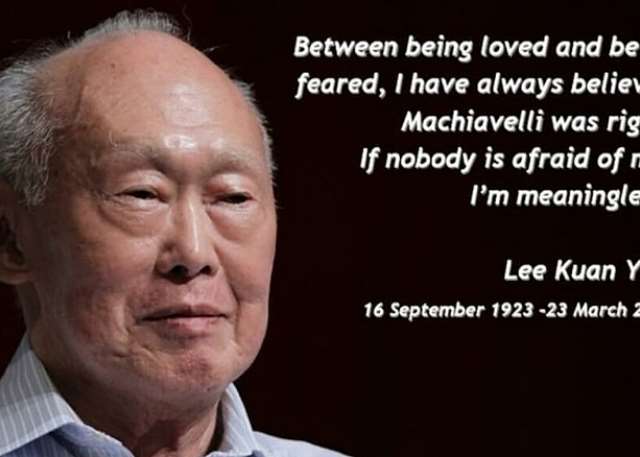


Tinubu vs. Lee Kuan Yew: Why the Comparison Fails the Test of Measurable Governance
The Report
In a recent opinion piece published by an independent Nigerian commentator, the author sharply criticizes Governor Hope Uzodimma’s comparison of President Bola Tinubu to Singapore’s founding Prime Minister Lee Kuan Yew. The article argues that the comparison is historically and factually unsound, asserting that Lee’s legacy rests on measurable outcomes—economic transformation, institutional integrity, and improved quality of life—while Tinubu’s administration, despite its bold reforms, has yet to deliver comparable results for ordinary Nigerians.
The author notes that Lee Kuan Yew inherited a resource-poor city-state in 1965 and built it into a global hub of prosperity, low corruption, and efficient governance. In contrast, the piece contends that Nigeria under Tinubu has experienced surging inflation, a weakened naira, and heightened economic anxiety, with reforms lacking adequate social safety nets. The author concludes that until Tinubu’s government can point to sustained improvements in living standards and institutional strength, the comparison remains political hyperbole rather than serious analysis.
“Lee Kuan Yew is not a convenient metaphor to be deployed in defence of contemporary politics. He is a benchmark forged through decades of demonstrable national transformation.”
Nigeria Time News Analysis
From a Nigerian policy perspective, the comparison between Tinubu and Lee Kuan Yew is not merely an exercise in political flattery—it reveals a deeper tension in how governance success is measured in Nigeria’s current political climate. Governor Uzodimma’s remarks, while perhaps intended to bolster the president’s image, inadvertently highlight a critical gap between rhetoric and reality that resonates across West Africa.
Lee Kuan Yew’s Singapore model was built on three pillars that Nigeria has historically struggled to replicate: meritocratic civil service, ruthless anti-corruption enforcement, and long-term policy consistency. While Tinubu’s administration has indeed undertaken significant economic reforms—fuel subsidy removal and exchange rate unification—these measures have been implemented without the institutional scaffolding that made Singapore’s reforms sustainable. The absence of a credible social protection framework, combined with persistent insecurity and infrastructure deficits, means that the pain of adjustment is borne disproportionately by the most vulnerable Nigerians.
Looking at the broader ECOWAS implications, the comparison also raises questions about regional governance benchmarks. West African leaders often invoke transformational figures like Lee Kuan Yew to signal ambition, but the region’s political economy—characterized by patronage networks, weak institutions, and external dependencies—makes such models difficult to transplant. For Nigeria, which accounts for over 60% of ECOWAS GDP, the failure to translate reform rhetoric into tangible improvements risks undermining regional confidence in democratic governance and economic integration.
For the Nigerian diaspora, the stakes are equally high. Many diaspora Nigerians, who have experienced efficient governance in their host countries, view the Lee Kuan Yew comparison with skepticism. They see a leadership that has yet to address the fundamental issues—electricity, education, healthcare, and security—that drive emigration. Until Nigeria can demonstrate measurable progress in these areas, the diaspora’s trust and investment will remain cautious.
Regional Context
Historically, comparisons between African leaders and Lee Kuan Yew are not new. In the 1990s, Ghana’s Jerry Rawlings and Uganda’s Yoweri Museveni were both hailed as potential “African Lee Kuan Yews” during periods of economic reform. Yet neither achieved Singapore’s level of transformation, largely because they operated within political systems that tolerated corruption and lacked institutional continuity. Nigeria’s current trajectory echoes these earlier disappointments, underscoring the difficulty of replicating the Singapore model in contexts where state capacity is weak and political incentives favor short-term patronage over long-term development.

Original Reporting By:
Independent Nigerian Commentator