










Osun CSOs Demand Federal Action on Kidnappings, Question Unequal Government Response
The Report
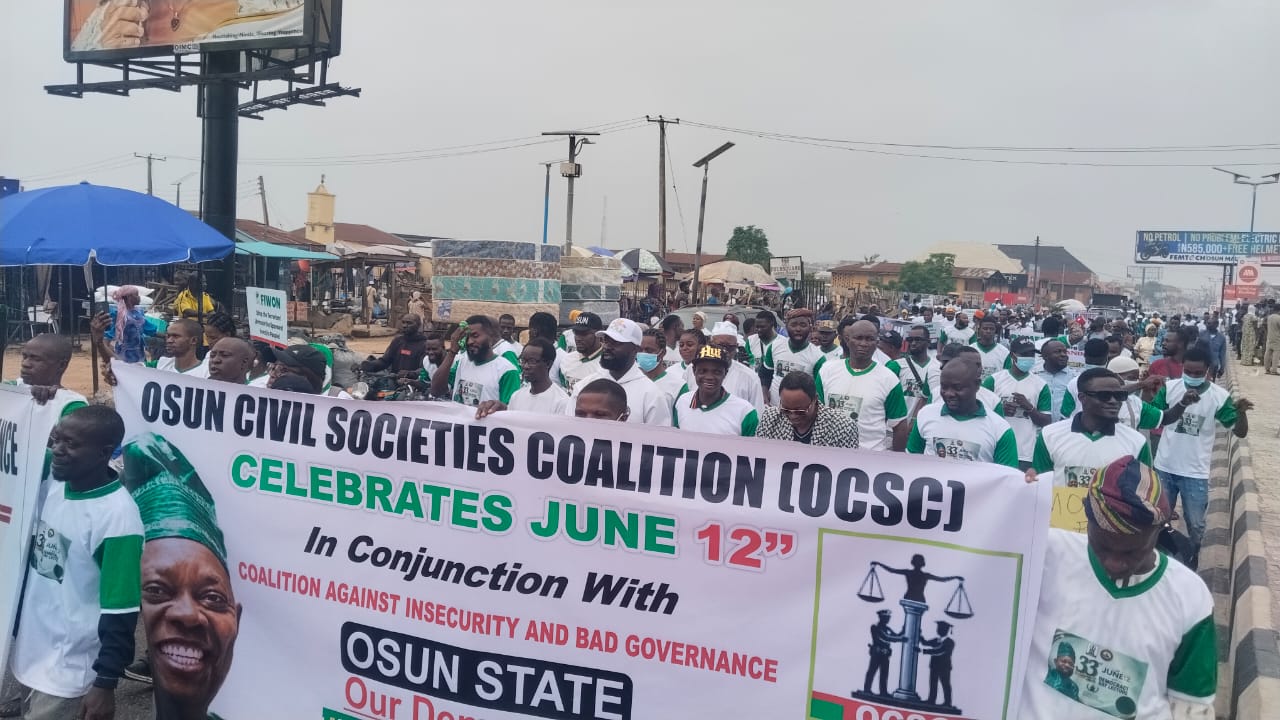
As reported by Lateef Dada of The Nation, Civil Society Organisations (CSOs) in Osun State held a peaceful procession on Friday, calling on the Federal Government to secure the release of all kidnapped Nigerians, including schoolchildren and their teachers. The demonstration, which began at Ayetoro and passed through several areas of Osogbo, was organized by groups including the Osun Civil Societies Coalition, Take It Back Movement, Coalition Against Insecurity and Bad Governance, and student union bodies.
Speaking as convener of the Coalition Against Insecurity and Bad Governance, Kola Ibrahim highlighted that the rising kidnapping of schools threatens the future of education in Nigeria. He urged the immediate release of all abductees, noting that some children and teachers have been held captive for weeks. Ibrahim also questioned what he described as an unequal government response, citing an instance where the kidnapping of a relative of a former minister reportedly led to quicker rescue compared with cases involving ordinary families. He further criticized government spending on security, alleging that despite huge budgets at federal and state levels, results have not matched expenditures.
“Providing security is a constitutional responsibility of government,” said Comrade Waheed Lawal, Chairman of the Osun Civil Society Coalition (OCSC). He urged urgent action to address insecurity and improve citizens’ welfare, adding that rising inflation has made life difficult and called on authorities to ensure Nigerians benefit from democracy.
Nigeria Time News Analysis
From a Nigerian policy perspective, the Osun CSO protest underscores a growing frustration with the Federal Government’s security response, particularly regarding the abduction of schoolchildren. The mention of unequal government response—where the kidnapping of a politically connected individual allegedly receives faster attention—raises serious questions about equity in security operations. This perception, whether accurate or not, erodes public trust in state institutions and fuels the narrative that ordinary Nigerians are left to fend for themselves.
Looking at the broader ECOWAS implications, Nigeria’s kidnapping crisis has regional spillover effects. The Sahel and Lake Chad Basin regions already face cross-border armed group activity, and Nigeria’s inability to secure its schools and communities weakens collective regional security frameworks. ECOWAS protocols on counter-terrorism and humanitarian response may be undermined if Nigeria, as the bloc’s largest economy and military power, cannot demonstrate effective domestic security governance.
For the Nigerian diaspora, these reports reinforce concerns about safety during visits home and the viability of long-term investment in the country. Diaspora remittances, which exceeded $20 billion in 2023, are often directed toward family welfare and education. The kidnapping of schoolchildren directly threatens the educational aspirations of families, potentially reducing diaspora willingness to fund school fees or support educational infrastructure in high-risk areas.
Economically, the security crisis imposes direct costs: increased spending on private security, school closures, and reduced agricultural productivity in affected regions. The CSO criticism of security budgets—despite massive allocations—points to a governance failure in translating expenditure into outcomes. This disconnect between spending and results is a recurring theme in Nigerian public finance, and it undermines the government’s credibility with both domestic and international stakeholders.
Regional Context
Nigeria has experienced a surge in mass abductions since the 2014 Chibok schoolgirl kidnapping, with armed groups increasingly targeting schools for ransom or ideological purposes. The phenomenon has spread across northern and southwestern states, including Osun, which had previously been considered relatively secure. The Federal Government’s response has included the establishment of special security task forces and the passage of anti-kidnapping legislation, but implementation remains uneven. The CSO demand for equal treatment of all victims reflects a deeper societal grievance about the two-tier justice system, where wealth and political connections can influence the speed and effectiveness of state intervention.
Original Reporting By:
The Nation