











Education Amid Ruins: Gaza’s Children Navigate War’s Aftermath in Makeshift Schools
Source: This report is based on information from a primary source article by Channels Television.
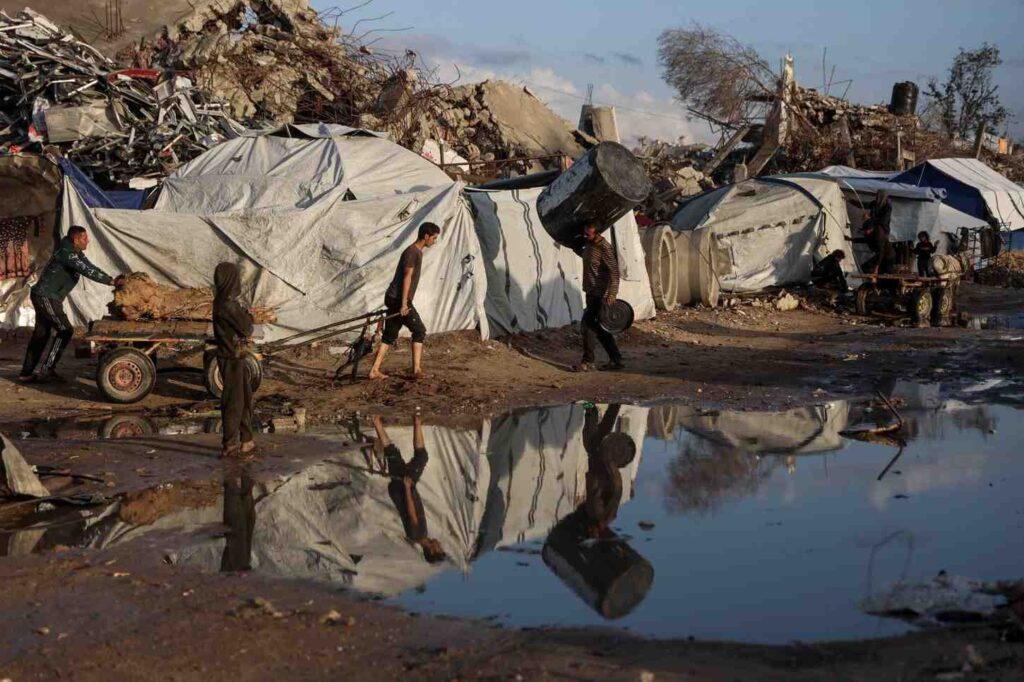
Eleven-year-old Layan Haji’s journey to school is a daily trek through devastation. Without a backpack, books, or a uniform, she navigates the rubble-strewn streets of Gaza City to reach a temporary classroom—a symbol of both profound loss and resilient hope. Her education, interrupted for two years by war, has resumed in a setting unrecognizable from the vibrant institution she once knew.
A Fractured System, a Determined Return
The Al-Louloua al-Qatami school, which Haji attends, is one of several facilities tentatively reopening following a fragile ceasefire. According to a joint announcement by UNRWA and Gaza’s education ministry, children are gradually returning to schools in areas not under direct Israeli military control. However, the reality on the ground is a stark departure from pre-war normalcy.
Painted walls and student artwork have been replaced by tents erected inside damaged buildings. The fundamental tools of learning are absent. “We don’t have books or notebooks. The libraries have been bombed and destroyed. There is nothing left,” Haji stated, encapsulating the material void facing an estimated 900 students at her school alone.
The Dual Burden of Survival and Study
For teenagers like 16-year-old Said Sheldan, the joy of returning to class is tempered by the overwhelming demands of daily survival. “I don’t have books, notebooks, pens, or a bag. There are no chairs, electricity, or water—not even proper streets,” he explained. His academic day begins with more pressing chores: collecting water and waiting in long lines for bread for his family, who have been displaced ten times.
This reality highlights a critical, and often overlooked, consequence of the conflict. Iman al-Hinawi, the school’s headmaster, warns that the war has forced countless children into “heavy labour” to support households where the primary earner was killed. The UN’s prior declaration of famine in the territory means that for many children, the struggle to “gather firewood, fetch water, and wait in line for food” takes precedence over their studies.
Healing Trauma Through Play and Perseverance
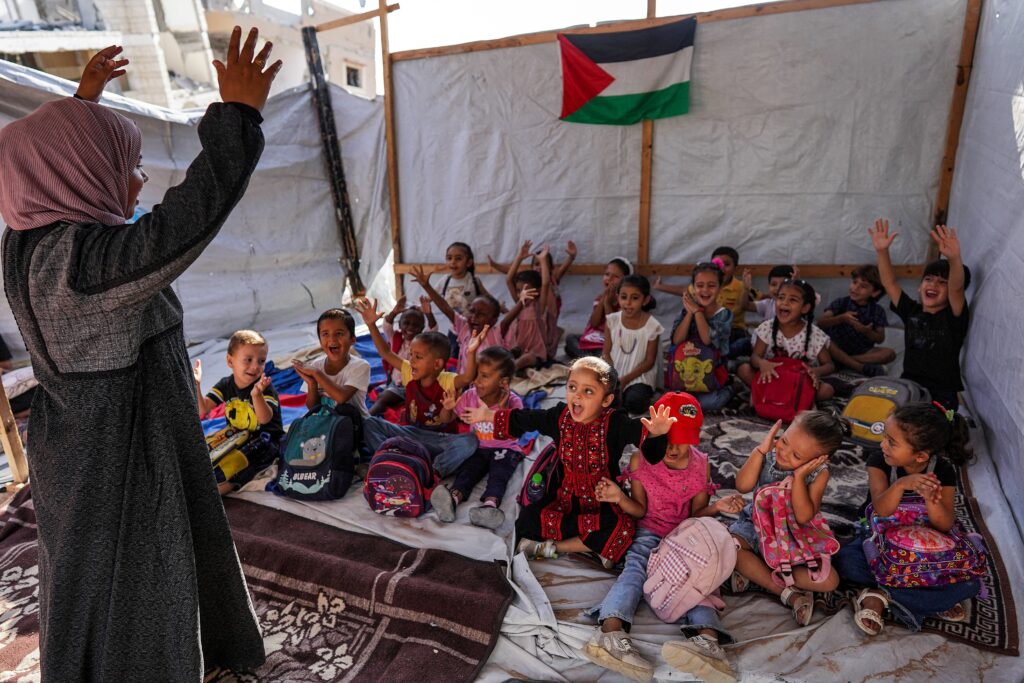
Recognizing the deep psychological scars borne by its students, the educational response in Gaza is evolving. Schools like Al-Louloua al-Qatami are adopting innovative teaching methods that incorporate play to address trauma. Girls dance to solve math problems, and children act out comedic scenes to recite poems, creating pockets of normalcy and joy amidst the chaos.
Faisal al-Qasas, who manages the school, noted that these extracurricular activities are crucial for supporting mental health and facilitating a return to learning. However, he admits that the children’s focus is constantly fractured by the need to queue for essential supplies, underscoring the immense challenge of rebuilding not just infrastructure, but also concentration and a sense of security.
A Landscape of Destruction and a Race Against Time
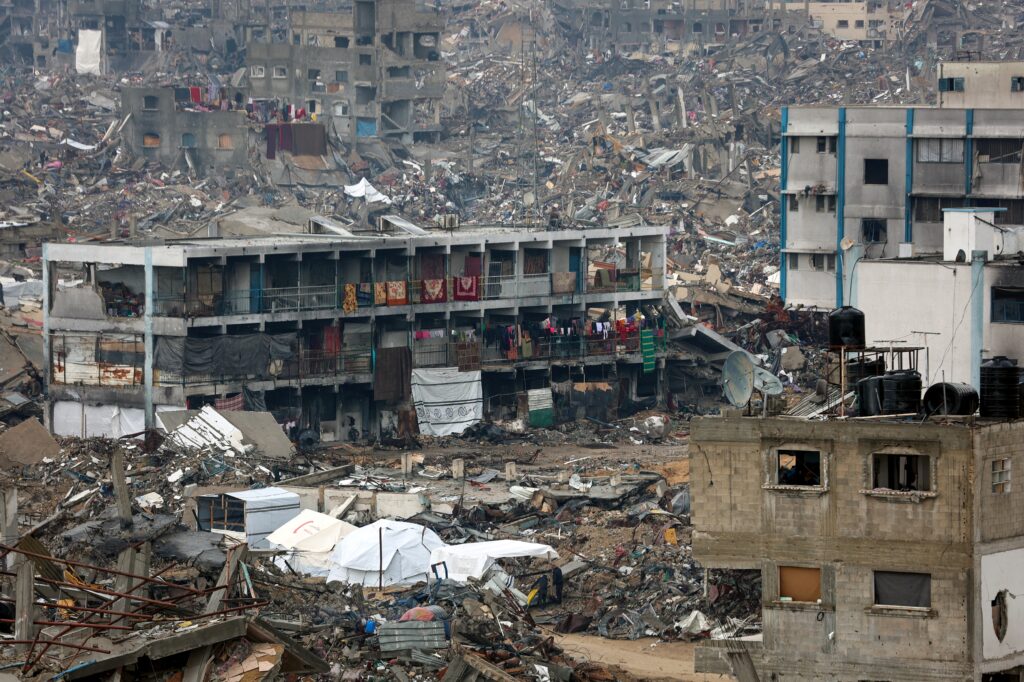
The scale of the challenge is monumental. A UN assessment found that 97 percent of Gaza’s schools have sustained damage, with most requiring complete reconstruction or major repairs. With many schools also serving as shelters for the displaced, the physical space for education has dramatically shrunk.
Initiatives are scrambling to fill the gap. UNRWA has opened “temporary learning spaces” serving tens of thousands, while international efforts, like Qatar’s “Rebuilding Hope for Gaza” program, aim to support over 100,000 students with supplies, internet access, and psychological support. Yet, even these heroic efforts fall short. Current enrollment figures are a fraction of the education ministry’s estimate of more than 758,000 students in the strip.
The Fight to Preserve a Legacy of Literacy
The stakes extend far beyond the current academic year. Before the war, Gaza was, as local educator Hazem Abu Habib noted, “completely free of illiteracy.” The conflict now threatens to unravel this hard-won achievement, creating a lost generation. The makeshift classrooms offering just four core subjects represent a desperate bid to preserve the foundational pillars of knowledge.
As Hazem Abu Habib starkly concluded, “education is facing its most critical period.” The story of Gaza’s children returning to school is not one of simple resumption, but a complex narrative of navigating trauma, poverty, and destruction in a determined pursuit of a future that the war tried to erase.