











Defense Minister Musa’s Kaduna Visit Spotlights Community-Led Peacebuilding in Nigeria’s Middle Belt
A high-profile banquet hosted by the Atyap community in Nigeria’s Kaduna State has become a focal point for analyzing the complex interplay between national security strategy and grassroots reconciliation efforts in the country’s volatile Middle Belt region. The event, held in honor of Defense Minister General Christopher Gwabin Musa, transcended a mere ceremonial gathering, revealing a strategic dialogue on the non-military dimensions of securing lasting peace.
Beyond Ceremony: A Forum for Strategic Dialogue
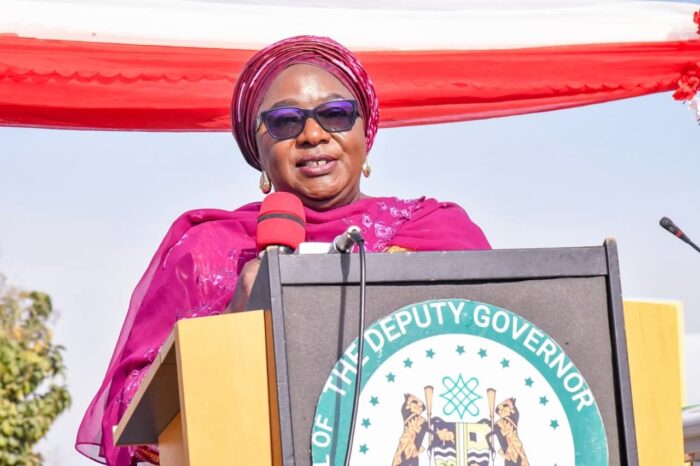
While the event, as reported by Dateline.ng, featured traditional honors and commendations, the substantive remarks from both political and military leaders pointed to a significant, evolving narrative. Representing Governor Uba Sani, Deputy Governor Dr. Hadiza Sabuwa Balarabe framed General Musa’s leadership through the lens of “preparation, principle, and patriotism.” This public articulation, coming from a state government, signals an attempt to align local peace initiatives with the ethical framework of the national defense apparatus.
The Defense Minister’s Civilian Mandate: A Call for Shared Responsibility
In a notable shift from purely military rhetoric, General Musa’s address directly engaged the community on its role. His warning against the “danger” of bitterness and his advocacy for forgiveness as a pathway to reconciliation underscore a critical, and often underreported, aspect of modern security leadership in Nigeria: the recognition that hardware and troop deployments alone are insufficient.
“Lasting peace cannot be achieved by the government alone,” the Minister stated, according to the source report. This public admission places a shared burden on communities historically caught in cycles of farmer-herder clashes and ethno-religious violence. It suggests a doctrinal pivot, or at least a complementary strategy, where the Ministry of Defense sees its mission as enabling a social environment where military solutions are less frequently required.
Contextualizing the Event: Zangon Kataf and the Quest for Stability
The choice of location—the Zangon Kataf Chiefdom—is itself analytically significant. This area has been a hotspot for protracted conflict. The prayers for “sustained peace” by the Paramount Chief, Sir Dominic Yahaya Gambo, and the conferment of titles on community leaders, must be viewed as part of a long-term, indigenous conflict-resolution mechanism. The presence of the nation’s top defense official legitimizes and amplifies these local efforts, potentially integrating them into a broader, state-sanctioned peace architecture.
This event exemplifies a “whole-of-society” approach to security, a concept often discussed in policy circles but rarely visible in such tangible community settings. The banquet served as a symbolic handshake between the coercive power of the state, represented by the Defense Minister, and the moral authority of traditional institutions, represented by the Chiefdom.
Implications for Security Policy and Community Relations
The convergence of messages—from the Governor’s praise of “inclusiveness” to the Minister’s call for cooperation and the Chief’s focus on reconciliation—creates a powerful, unified narrative. For observers and policymakers, the key takeaways are multifaceted:
1. Legitimacy Through Engagement: High-level visits can bolster the standing of traditional rulers as peace brokers, provided they are perceived as impartial.
2. Strategic Communication: The military is actively engaging in strategic communication aimed at winning “hearts and minds” by addressing the psychological and social roots of conflict.
3. The Limits of Ceremony: While symbolic, such events must be followed by tangible actions—improved security patrols, equitable justice for victims, and economic opportunities—to avoid being seen as mere political theater.
Ultimately, the Atyap banquet was more than an honorific dinner. It was a microcosm of Nigeria’s contemporary security challenge: a public performance of unity and strategy that highlights the urgent need to blend military readiness with deep, community-owned reconciliation. The true test will be whether the dialogue started at the banquet table translates into durable peace on the ground in Kaduna State and beyond.
This analysis is based on reporting from the primary source: Dateline.ng.