





Beyond Credentials: Why Peter Obi Argues Nigeria Needs a Wealth Creator, Not Just a PhD
In a recent interview on News Central’s flagship program ‘60 Minutes with Kay,’ former Labour Party presidential candidate Peter Obi reignited a critical national conversation about leadership qualifications. While responding to comments made by Senator Rabiu Kwankwaso—who previously claimed his PhD made him more qualified for the presidency—Obi pivoted the debate from academic credentials to economic pragmatism. His central thesis: Nigeria’s current crisis demands a leader who has built wealth, not just studied it.
The Context: A Clash of Leadership Philosophies
The exchange traces back to 2023, when Kwankwaso, then the presidential candidate of the New Nigeria Peoples Party (NNPP), stated at Chatham House in London that his PhD made him a superior candidate to serve as Obi’s running mate. Fast forward to today, and both politicians have aligned under the Nigeria Democratic Congress (NDC). With the party zoning its presidential ticket to the southern region—where Obi hails from—Kwankwaso is now widely expected to be Obi’s running mate in the 2027 elections.
This political merger has not erased their philosophical differences. In the interview, Obi addressed Kwankwaso’s earlier claim directly, acknowledging the value of a PhD while firmly arguing that Nigeria’s most pressing need is not academic theory but practical economic stewardship.
Obi’s Core Argument: Wealth Creation vs. Wealth Sharing
“Qualification is a perspective,” Obi stated. “He (Kwankwaso) said he was more qualified because he has a PhD, which is not bad. I don’t have a PhD. He has some experience, he’s exposed. He was a minister. There’s no doubt about that. I don’t think his claim was wrong—but for what Nigeria needs today, Nigeria needs a wealth creator, wealth manager.”
Obi contrasted his background as a serial entrepreneur with the traditional political class, which he characterized as “wealth sharers” rather than “wealth creators.” He emphasized that he has built reputable businesses from scratch, both locally and internationally, and that no current presidential aspirant—including President Bola Tinubu—can match his hands-on experience in creating and managing wealth.
Why This Distinction Matters for Nigeria’s Economy
Nigeria faces a multi-dimensional economic crisis: high unemployment, a weak manufacturing base, a reliance on oil revenues, and a public sector that consumes far more than it produces. Obi’s argument taps into a growing frustration among citizens who feel that the country’s leaders have historically been skilled at distributing state resources (often along patronage lines) but woefully inadequate at generating new value.
Consider this: A PhD in political science or public administration may equip a leader with analytical tools, but it does not necessarily teach the discipline of building a profitable enterprise, managing cash flow, or creating jobs. Obi’s point is that Nigeria needs a leader who understands the mechanics of production, not just the politics of allocation.
Responding to the ‘Common Trader’ Label
Obi also addressed the dismissive label of being a “common trader,” a term sometimes used by political opponents to undermine his business background. He turned the insult into a lesson in economic reality: “Trading and making money from it is one of the most difficult things to do—else everyone would be a trader.”
This is a crucial point. In many developing economies, trading—whether in goods, commodities, or services—is the backbone of the informal sector, which employs the majority of Nigerians. By reframing trading as a difficult and valuable skill, Obi challenges the elitist notion that only certain professions (law, medicine, academia) confer legitimacy for high office.
Practical Example: From Trader to Industrialist
Obi’s own career trajectory illustrates this. He started as a trader in consumer goods before building a conglomerate that included retail, manufacturing, and distribution. His tenure as Governor of Anambra State (2006–2014) is often cited for fiscal prudence: he left billions of naira in savings and investments, reduced debt, and prioritized education and healthcare. This, he argues, is the direct application of wealth-creation principles to public service.
What Nigeria Needs: A New Leadership Archetype
Obi’s vision for leadership is not anti-intellectual. He acknowledges Kwankwaso’s PhD and ministerial experience as valid qualifications. But he insists that the country’s current predicament—stagnant growth, massive youth unemployment, and a debt-to-revenue ratio that leaves little room for investment—requires a leader who can do more than analyze problems. It requires someone who has solved them in the real world.
“What Nigeria needs today is somebody that creates wealth, not somebody who shares wealth, somebody who can manage resources more efficiently and save for the future,” Obi concluded.
Broader Implications for Voters
This debate has significant implications for how voters evaluate candidates. Should a PhD be weighted equally with a proven track record of job creation? Should ministerial experience trump entrepreneurial success? Obi’s argument suggests that the metrics for presidential fitness must evolve to match the country’s economic realities.
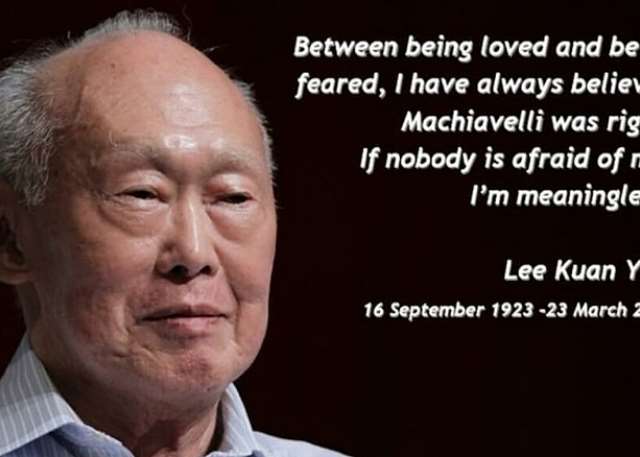
For context, countries like Singapore and Rwanda have successfully elevated leaders with strong business and management backgrounds—Lee Kuan Yew was a lawyer but prioritized economic pragmatism, while Paul Kagame’s background includes military strategy and state-building. Neither held a PhD, yet both transformed their economies.
Conclusion: A Debate That Will Shape 2027
As the 2027 elections approach, the Obi-Kwankwaso partnership will be tested not just by political strategy but by this fundamental question: What kind of qualification does Nigeria need most? Obi has staked his claim on wealth creation and management. Whether voters agree will depend on how deeply they feel the pain of economic stagnation—and how much they believe a “wealth creator” can heal it.
[[PEAI_MEDIA_X]]
All credit goes to the original article. For more information, read the: Source link