

Minister Inspects AGILE Projects in Kano: A Major Boost for Girl-Child Education
Nasiru Yusuf Ibrahim
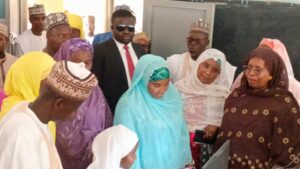
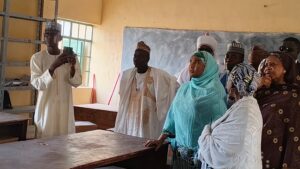
The Minister of State for Education, Professor Suwaiba Sa’id Ahmad, has commended President Bola Tinubu for his unwavering support of the Adolescent Girls Initiative for Learning and Empowerment (AGILE) Project. During an inspection visit to selected AGILE project sites in Kano State, including Government Girls College, Kano, and Government Girls Senior Secondary School (GGSS), Dukawuya, she described the initiative as a transformative intervention for girl-child education in Nigeria.

Why AGILE Matters: Context and Impact
The AGILE project, a World Bank-supported initiative, is designed to address critical barriers to girls’ education in Nigeria. According to UNICEF, Nigeria has one of the highest numbers of out-of-school children globally, with girls disproportionately affected due to poverty, cultural norms, and inadequate infrastructure. AGILE tackles these challenges by:
- Improving infrastructure: Renovating and constructing schools with safe, girl-friendly facilities such as toilets, libraries, and laboratories.
- Increasing access: Providing scholarships, conditional cash transfers, and learning materials to reduce dropout rates.
- Empowerment programs: Offering life skills training, digital literacy, and vocational education to prepare girls for economic independence.
Professor Suwaiba emphasized that the Tinubu administration remains committed to implementing policies that improve education standards and expand access to quality learning opportunities for adolescent girls nationwide. She noted that AGILE aligns with the government’s broader agenda to reduce gender disparities in education and promote sustainable development.
Quality Assurance and Infrastructure Development
During the inspection, the minister expressed satisfaction with the quality of projects executed under AGILE in Kano State. She highlighted that the initiative would significantly improve educational infrastructure and learning outcomes. However, she directed principals and School-Based Management Committees (SBMCs) handling some projects to make necessary corrections where required to ensure durable, high-quality infrastructure.
This emphasis on quality control is crucial. Poorly constructed schools can deter attendance and pose safety risks, especially for girls. By holding contractors and local committees accountable, the government ensures that investments yield long-term benefits.
National Coordinator Highlights Achievements
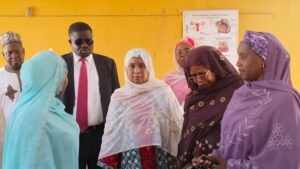
Speaking during the visit, the National Coordinator of the AGILE Project, Hajiya Amina Buba Haruna, outlined recent achievements. She noted that the project has already renovated dozens of schools across multiple states, with Kano being a key beneficiary. The focus remains on creating safe, inclusive learning environments that encourage girls to stay in school and complete their secondary education.
Kano State’s Commitment to Education
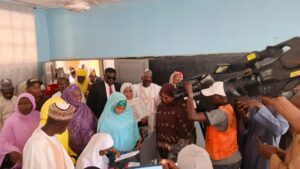
The Kano State Commissioner for Education, Dr. Ali Haruna Makoda, reiterated the state government’s dedication to education. He disclosed that since the declaration of a state of emergency on education in 2023, the sector has consistently received more than 30% of the state’s annual budget. This increased allocation has enabled:
- Construction and renovation of schools.
- Training and recruitment of teachers.
- Provision of learning materials and scholarships.
Makoda commended Governor Abba Kabir Yusuf for sustaining investments aimed at improving learning environments and educational outcomes across the state. He also appreciated the minister for visiting Kano to inspect AGILE projects and for her continued support.
Ambitious Plans for Girls’ Education
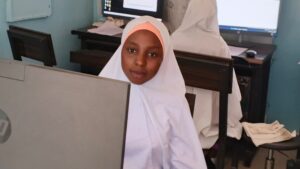
The State Project Coordinator, Alhaji Mujittapha Aminu, revealed that about 300 schools across Kano State would be renovated under the AGILE project. Additionally, the state government plans to construct 49 new girls’ schools across the 484 wards in Kano. This ambitious plan aims to reduce travel distances for girls, a common barrier to attendance, and provide dedicated spaces for their education.
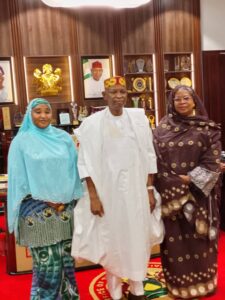
Prof. Suwaiba Sa’id Ahmad, Alhaji Abba Kabir Yusuf, and Hajiya Amina Buba
High-Level Engagement and Future Outlook
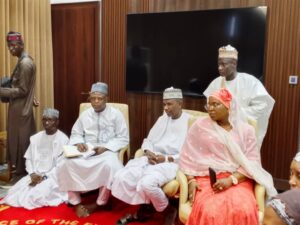
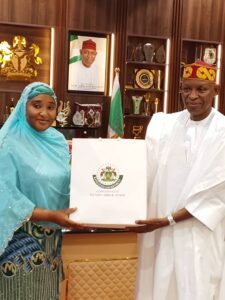
As part of the visit, the minister, accompanied by the National Project Coordinator of AGILE, Hajiya Amina Buba Haruna; the Commissioner for Education, Dr. Gwani Ali Abubakar Makoda; the Project Coordinator, Alhaji Mujittapha Aminu; and the Head of the Project Financial Management Unit (HPFMU), Alhaji Aliyu Lawan, met with Governor Abba Kabir Yusuf. They discussed the progress of AGILE in Kano State and explored ways to accelerate implementation.
Practical Example: How AGILE Changes Lives
Consider a 14-year-old girl named Aisha from a rural village in Kano. Before AGILE, her school had no toilets, forcing her to miss classes during menstruation. The building was dilapidated, and she often studied under a tree. With AGILE, her school received new classrooms, separate sanitation facilities for girls, and a library. She also received a scholarship and life skills training. Today, Aisha aspires to become a teacher. Stories like hers are multiplying across Kano, demonstrating the project’s tangible impact.
Conclusion: A Model for National Replication
The AGILE project in Kano State serves as a model for other regions. By combining infrastructure development, access enhancement, and empowerment programs, it addresses the multifaceted challenges facing girls’ education. The minister’s inspection underscores the government’s commitment to accountability and quality. With continued investment and political will, AGILE can help Nigeria achieve its Sustainable Development Goal 4 of inclusive and equitable quality education for all.

All credit goes to the original article. For more information, read the Source link.